
The Intention Behind the Lens
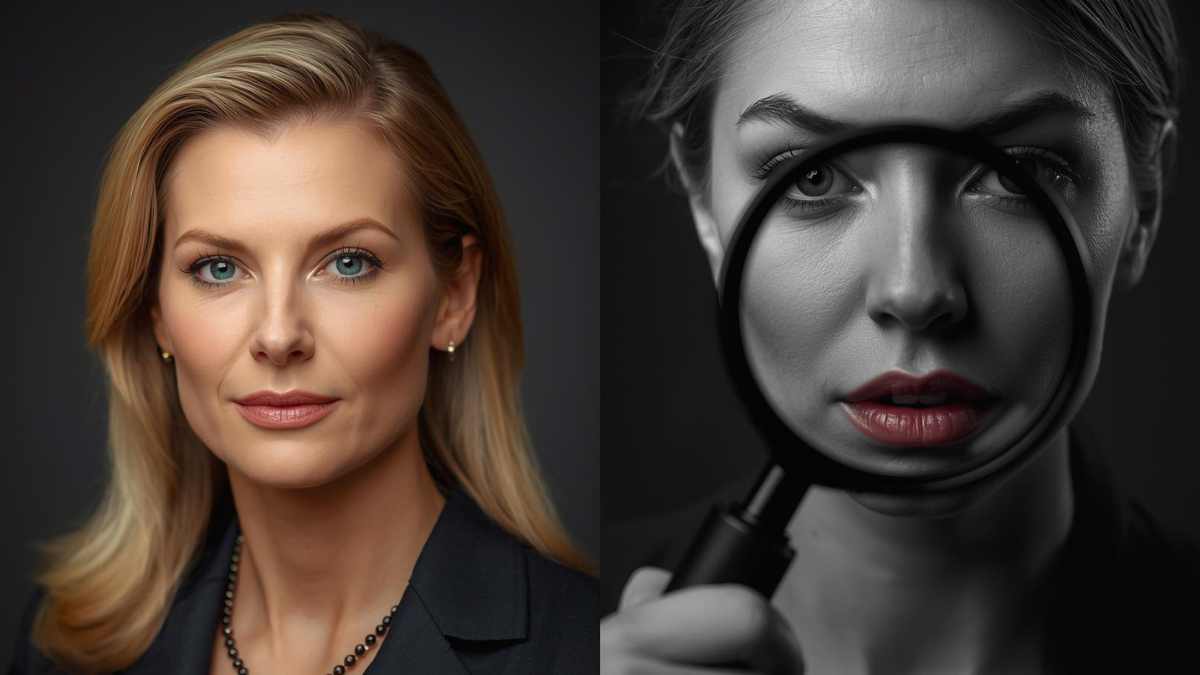
The intention was art. The goal was to cut through the polished veneer of political theater and capture something raw, something real. That’s what Vanity Fair set out to do with its stunning portfolio of Trump’s second-term team. But in their quest for unfiltered truth, they accidentally lit a cultural firestorm, and at the center of it all was a single, unflinching close-up of White House Press Secretary Karoline Leavitt. The portrait didn’t just show a face; it launched a thousand debates about beauty, power, and the brutal price of living in the public eye.
More Than Just a Photograph
This story is about more than just a photograph. It’s about what happens when the carefully constructed walls of political image come crashing down for someone like Karoline Leavitt, who has spent her career crafting messages and managing perceptions.
The Unflinching Photo That Made Karoline Leavitt Viral
Christopher Anderson is known for a style that gets uncomfortably close. His portraits don’t flatter; they reveal. Using a medium-format camera and stark lighting, he captured every pore, every freckle, every perceived imperfection on the faces of the nation’s most powerful officials. But it was the image of Karoline Leavitt, the 28-year-old press secretary and the administration’s designated “mouthpiece,” that stopped the scroll.
The Internet’s Immediate Reaction
The internet did what it does best: it zoomed in, dissected, and rendered its verdict. Almost immediately, the conversation fixated on her lips. In the hyper-detailed image, small marks along the border of her lips became undeniable focal points. The comments section became a frenzy of speculation. “Lip filler marks,” one user declared. “Vanity Fair, you’re brutal for this,” wrote another. The photo, intended to be a serious political portrait, was instantly memed, mocked, and analyzed with the intensity of a crime scene investigation. It was a moment where the political became deeply personal, and the personal became a public spectacle for Karoline Leavitt.
Beyond the Lips: The Pressure on Karoline Leavitt
The frenzy around Leavitt’s look didn’t happen in a vacuum. It tapped into a well-documented aesthetic quietly taking hold in certain political circles, often dubbed the “Mar-a-Lago face.” It’s a look characterized by overfilled cheeks, pillow-smooth skin, and lips that border on the celestial. It’s a uniform of sorts, a signal of alignment with a certain brand of power.
The Weight of Public Scrutiny
Karoline Leavitt, with her youth and ambition, exists under immense pressure to embody this ideal. The scrutiny isn’t just coming from the public or online critics; it comes from the very top. President Trump himself has publicly commented on her appearance, pausing a speech on the economy to praise her “beautiful face and those lips that don’t stop-op-op-op, like a little machine gun.” When your boss is talking about your lips on the national stage, the message is clear: your appearance is part of your job. In this context, the Vanity Fair photo wasn’t just a portrait; it was a high-resolution examination of whether Karoline Leavitt was living up to the aesthetic standard required of her role.
‘We’re All Going to Get Fired’: The Behind-the-Scenes Drama
Behind the scenes, the anxiety was palpable. During the shoot, as Anderson arranged administration’s top brass around a table in the Roosevelt Room, the mood was reportedly tense. One official was overheard muttering what everyone was thinking: “We’re all going to get fired for this.” For a team that thrives on controlling the narrative, stepping into the lens of a photographer famous for his brutal honesty was a massive gamble. They willingly walked into the lion’s den, only to realize too late that the lion was hungry.
If you’re interested in weekly side hustles you can findout my this Blog post
The Cost of Unwanted Transparency
While the feature contained bombshell quotes from Chief of Staff Susie Wiles, it was the raw visual honesty of the portraits that caused the most immediate damage. The administration that prides itself on being “the most transparent in history” suddenly found itself facing a transparency it never intended. The photos stripped away the makeup artists, the soft lighting, and the carefully crafted Instagram filters, leaving officials looking jarringly human. And in the world of high-stakes politics, looking human can sometimes be the biggest liability of all, especially for someone like Karoline Leavitt who serves as the public face of the administration.
If you plan to build a website for affiliate income or blogging, using a fast and stable hosting provider is essential. Reliable hosting plans like this one help websites load quickly and stay online without issues: Hostinger Hosting Plan
The Mirror That Reflected Us All
In the end, Christopher Anderson’s camera succeeded in its mission. It did cut through the political theater. It just didn’t expose what Vanity Fair or the White House expected. Instead of revealing the inner workings of policy, it exposed our own cultural obsessions, our deep-seated biases about beauty and gender, and the intense human cost of a life lived under a microscope. The camera, in its unflinching honesty, didn’t just capture a woman; it captured a moment. It held up a mirror, not just to Karoline Leavitt, but to all of us, forcing us to confront what we really see when we look at power. And what we saw, in all its messy, complicated, and viral glory, wasn’t pretty.